

Philatelic fakes and forgeries

 Prefects
Updated: Aug 5
Introduction
The history of Philatelic fakes and forgeries is as old as the origin of postage stamps. Philatelic fakes and forgeries can be described as the labels which are produced to appear as postage stamps to deceive or defraud. While the term ‘forgery’ is used to indicate stamps produced to defraud collectors and stamp- issuing governments, the term ‘fake’ is used to mean alterations done to a genuine stamp to seem as something else. Learning to identify fake or forged stamps is a challenging branch of philately.
Noted Stamp Forgers in the History
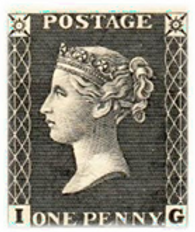
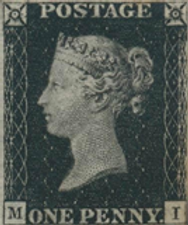
The first valid postage stamp, the Penny Black was issued in Great Britain in May, 1840, and counterfeiting of stamps immediately became a profitable initiative for those daring enough to try it. When stamps became collectors’ item and collectors started to pay large sums of money for them, the counterfeiters focused on reproducing rare and valuable stamps to swindle the investors. They tried to match the technique and the artistic details in genuine stamps. The foremost infamous forger of the history of stamp counterfeiting would be Jean de Sperati, a native of France who had a background in printing and photography. Experts believe that Sperati forged more than 70 000 individual stamps extending over 100 countries during his life time. Of course, there have been many other stamp forgers in the history, namely François Fournier, Madame Joseph, Dr. Peter Winter and Harold Treharne, but none was so skillful as Sperati.
Penny Black Genuine
PennyBlackForgery
Famous Cases of Counterfeit Stamps
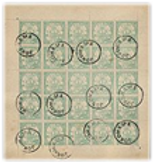
Actually, one of the very first forgeries were perpetrated by the British postal service in 1856. They counterfeited their 1d stamps, to test whether it can be copied. Unfortunately, it could be. Though, there have been other noted cases over the years, Winter’s fake British Guiana1c Magenta may be the most daring example of stamp fraud, because the stamp which was counterfeited was of such a great value. In 1800s in Hamburg, Spiro Brothers produced some 500 reproductions. However, they did not intend to deceive collectors. Spiro Brothers stated that they meant to fill space in collections. Over the years, their stamps were distributed so widely that people forgot the very fact that they were fakes and they still pop up in collections.
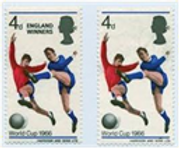
Another recent counterfeit case involved a commemorative stamp which was issued to mark England’s victory of Soccer World Cup in 1966. As the government could not issue enough stamps to meet the demand of the sports loving public, counterfeited stamps of the
commemorative stamp were sold in the black market. The Liberty Bell stamp of U.S. and the Sydney Harbor Bridge stamp of Australia are among the other famous stamps which have been subjected to counterfeit.
A sheet of Spiro forgeries of the Japanese 1872-75 Cherry Blossom stamps; includes
forged cancels
4penny commemorative stamps to mark English team’s Victory in 1966 Football
World Cup
Government Stamp Forgeries
Strangely, but a number of governments in the world have also counterfeited stamps. However, their motives were very different from the motives of an average stamp forger. Those governments have used stamp forgery to attack their rivals strategically to deprive their revenue, to cause confusion and to depict propaganda messages. During the World War II, the United States modified the 12 pfennig Hitler’s head stamp by replacing a death’s head and inscription of Futsches Reich (“ruined Reich”) instead of Deutsches Reich (German Empire). Also, the Himmler stamp was designed by the British secret service during the world War II with the intention of creating a division within the leadership of the Naziregime.
Protecting Yourself from Stamp Forgeries
Because of the technological advancement fraud is not easy today as it was 100 years ago. Now it is easier to identify forged stamps from authentic stamps as authentic stamps contain safety features such as watermarks, special engraving techniques, perforation and lining with silk threads. Moreover, fake stamps can be identified from false postmarks and re-gumming. However, forgeries are a crucial part of philatelic history, so no wonder that some of high-profile collectors have given a space for forged stamps in their collections.
Dithira Dithnal De Silva